 Rachel Kim
33259764f7
Rachel Kim
33259764f7
* add loadSavedInfo function in stateMachine; only open wizard if didLoadSavedInfo

* * add loadSavedInfo function in stateMachine; only open wizard if didLoadSavedInfo
* replaced savedInfo.miggrationServiceId string with sqlMigrationServer object
* selectDatbasesFromList helper function to check previously selected dbs in dbSelectorPage and sqlDatabaseTree

* * remove savedInfo references from targetSelectionPage, migrationModePage
* add selectDefaultDropdownValue helper to stateMachine to handle unify savedInfo selection logic
* add updateDropdownLoadingStatus to targetSelectionPage
* check if values exist before making api calls in statemachine

* removed savedInfo references from databaseBackupPage, integrationRuntimePage

* databaseBackupPage - targetDatabaseNames, networkShares, blobs need to rely on savedInfo as user may update the list of migrationdbs during the retry/saveAndClose

* re-add serverAssessments to savedInfo; only getAssessments if it does not exist or needs to be updated; fix networkShare type savedInfo

* rename _assessmentDbs to _databasesForAssessment; _migrationDbs to _databasesForMigration

* load blobs/networkshares savedinfo; move selectDefaultDropdownValue to utils

* fix selectDefaultDropdownValue; refreshDatabaseBackupPage when user changes target subscription or location
Azure SQL Migration
The Azure SQL Migration extension in Azure Data Studio brings together a simplified assessment and migration experience that delivers the following capabilities:
- A responsive user interface that provides an easy-to-navigate step-by-step wizard to deliver an integrated assessment, Azure recommendation and migration experience.
- An enhanced assessment engine that can assess SQL Server instances and identify databases that are ready for migration to Azure SQL Managed Instance or SQL Server on Azure Virtual Machines.
- SKU recommender to collect performance data from the source SQL Server instance to generate right-sized Azure SQL recommendation.
- A reliable Azure service powered by Azure Database Migration service that orchestrates data movement activities to deliver a seamless migration experience with minimal downtime.
- The ability to run migrations in either online (for migrations that require minimal downtime) or offline (for migrations where downtime persists through the duration of the migration) modes to suit your business requirements.
- The flexibility to create and configure a self-hosted integration runtime to provide your own compute for access to source SQL Server and backups in your on-premises environment.
Installation
From Azure Data Studio marketplace, install the latest version of “Azure SQL Migration” extension and launch the wizard as shown below.
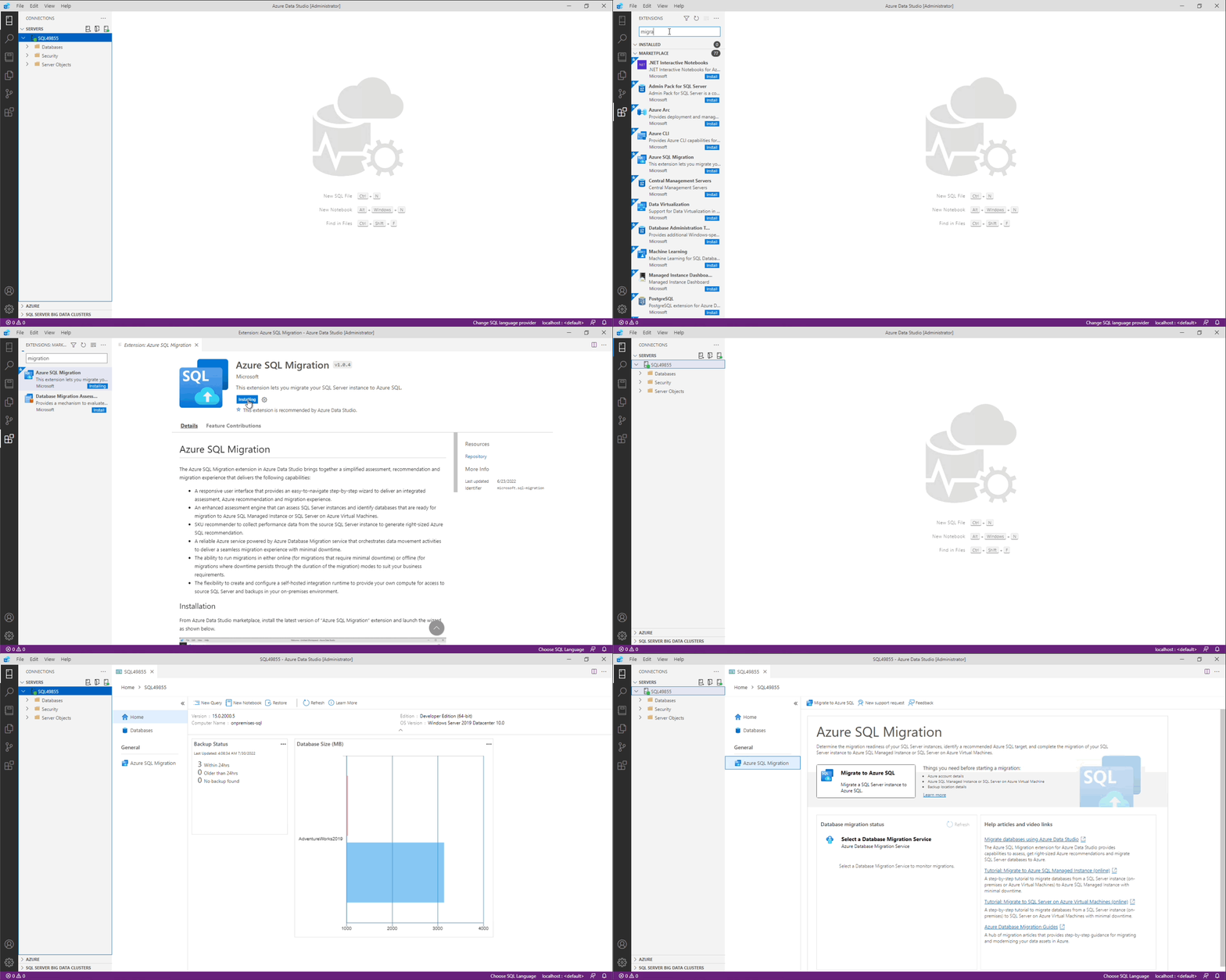
Things you need before starting Azure SQL migration
- an Azure account for migration (not required for assessment or SKU recommendation features)
- an Azure SQL Managed Instance or SQL Server on Azure Virtual Machine to migrate your database(s) to
- your database backup location details
Getting started
Refer to Migrate databases using the Azure SQL Migration extension for Azure Data Studio for detailed documentation on capabilities and concepts.
Assessment and SKU recommendation
The assessment and SKU recommendation feature
- evaluates the source SQL Server database(s) for migration readiness.
- generates right-sized SKU recommendations in Azure to meet the performance requirements of the source database(s) with minimal cost. Learn more.
Azure SQL targets
The Azure SQL Migration extension supports database migrations to the following Azure SQL targets.
Migration modes
The following migration modes are supported for the corresponding Azure SQL targets.
- Online - The source SQL Server database is available for read and write activity while database backups are continuously restored on target Azure SQL. Application downtime is limited to duration for the cutover at the end of migration.
- Offline - The source database cannot be used for write activity while database backup files are restored on the target Azure SQL database. Application downtime persists through the start until the completion of the migration process.
Need assistance or have questions/feedback
Refer to Get help from Microsoft support.
Code of Conduct
This project has adopted the Microsoft Open Source Code of Conduct. For more information see the Code of Conduct FAQ or contact opencode@microsoft.com with any additional questions or comments.
Privacy Statement
The Microsoft Enterprise and Developer Privacy Statement describes the privacy statement of this software.
License
Copyright (c) Microsoft Corporation. All rights reserved. Licensed under the Source EULA.