mirror of
https://github.com/ckaczor/azuredatastudio.git
synced 2026-01-16 17:22:29 -05:00
 cf8283a2b0
* Add CodeQL Analysis workflow (#10195)

* Add CodeQL Analysis workflow

* Fix path

* updated links

* edit line 31

* edit lines 11 and 31

* edit line 11 again

Co-authored-by: Justin Hutchings <jhutchings1@users.noreply.github.com>
54 lines
3.1 KiB
Markdown
54 lines
3.1 KiB
Markdown
# Kusto (KQL) extension for Azure Data Studio (Preview)
|
|
|
|
Connect and query Azure Data Explorer (Kusto) clusters and databases with Azure Data Studio, a modern data editor available for Linux, MacOS, and Windows. This extension enables you to interact with Kusto using Azure Data Studio features like:
|
|
|
|
- Connect to Azure Data Explorer anywhere.
|
|
- Searchable object explorer view for database objects.
|
|
- Query authoring and editing with Intellisense and syntax highlighting.
|
|
- Create a notebook with Kusto.
|
|
- View query results and save to CSV, JSON, XML, Excel, or as a chart.
|
|
|
|
For more information, visit the [Kusto (KQL) extension for Azure Data Studio](https://go.microsoft.com/fwlink/?linkid=2143832) documentation.
|
|
|
|
## Connect to an Azure Data Explorer cluster
|
|
|
|
You can connect to an Azure Data Explorer cluster with Azure Data Studio.
|
|
|
|
Select **New Connection** and choose **Kusto** for the **Connection Type**.
|
|
|
|
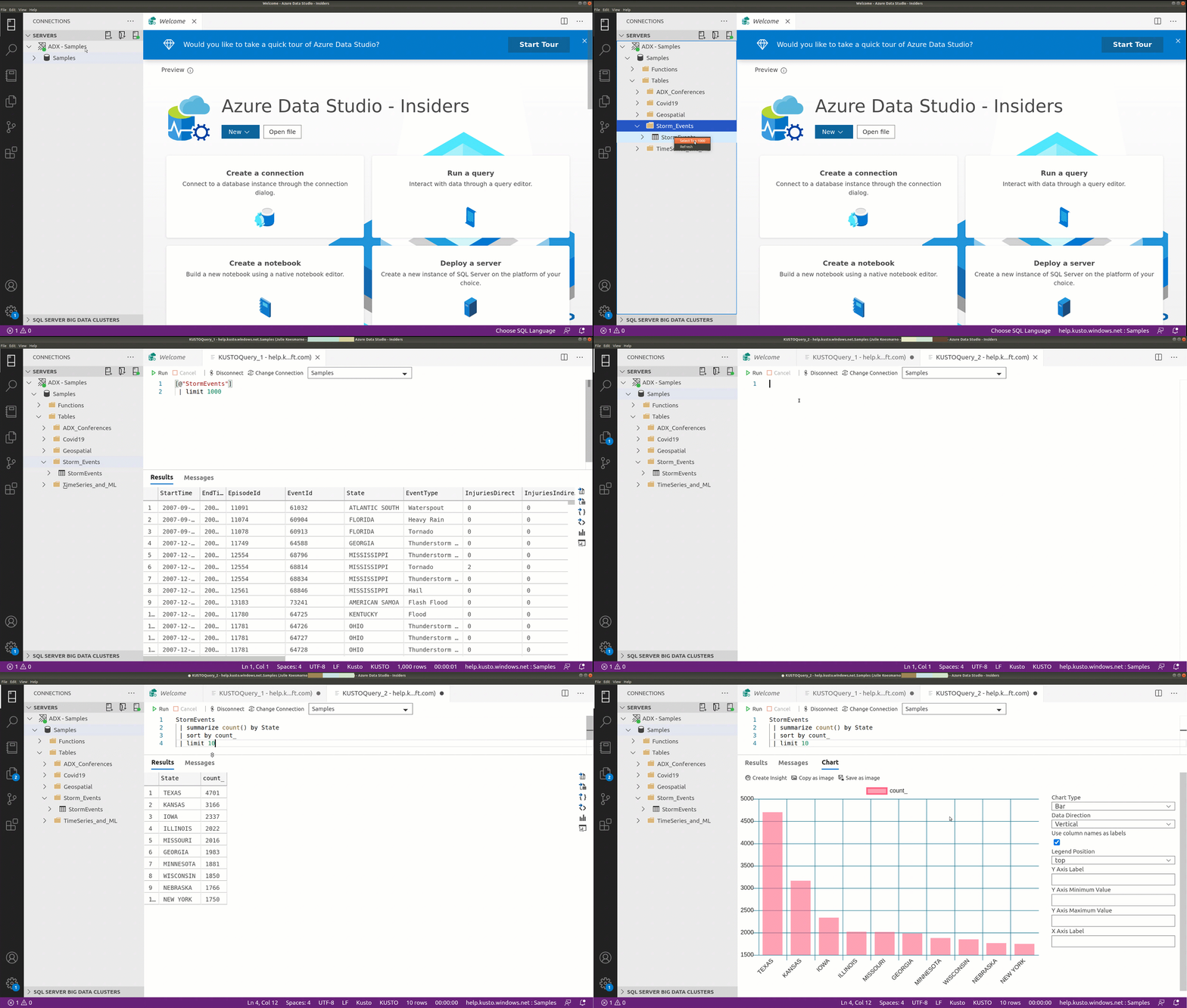
Once connected to a cluster, you can start writing a KQL query, run it and a view the results to save it to CSV, JSON, XML, Excel, or as a chart as shown below.
|
|
|
|
|
|
|
|
## Create notebooks using the Kusto Kernel
|
|
|
|
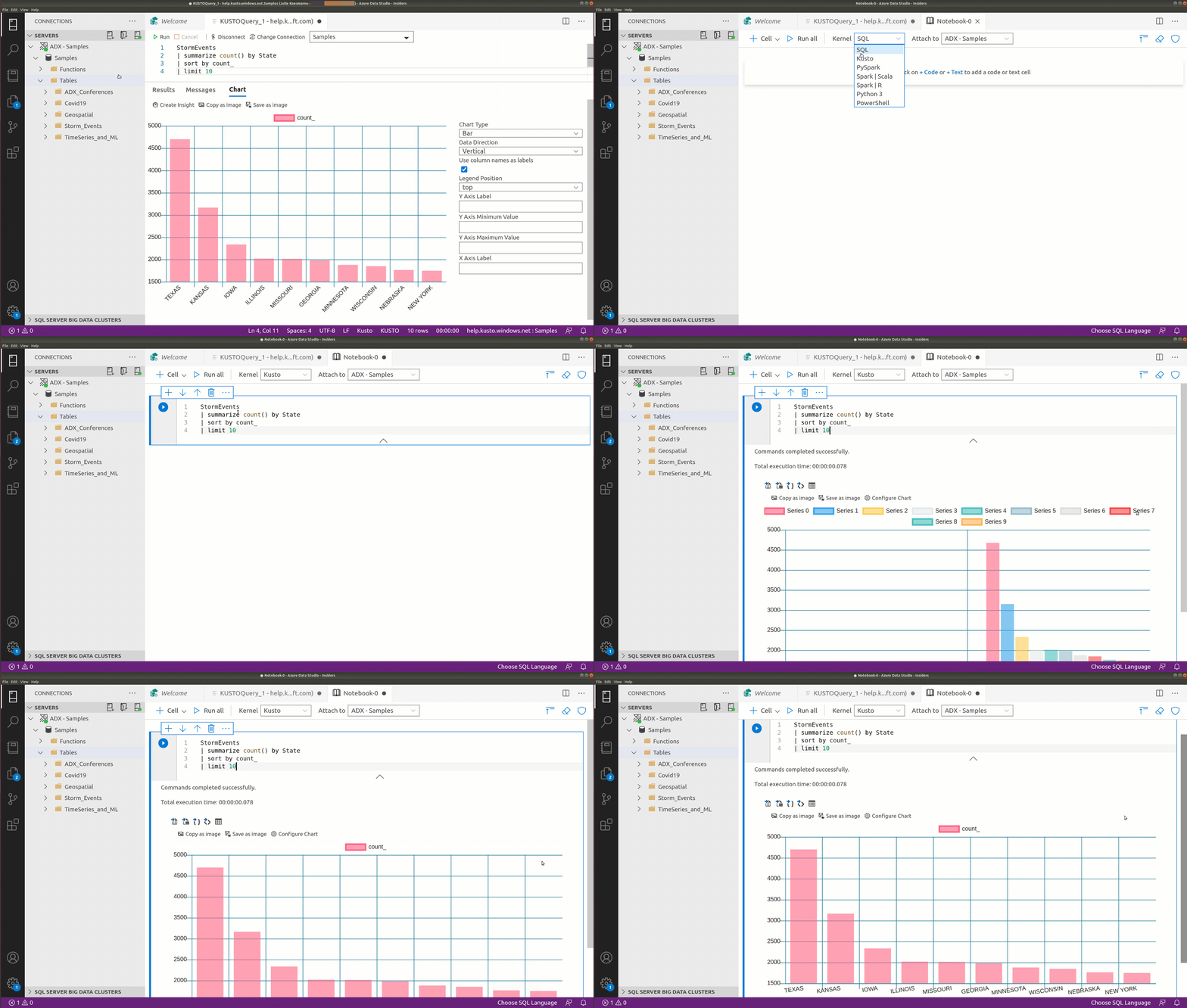
You can run Kusto in a notebook with Azure Data Studio.
|
|
|
|
Select on **Create notebook** to create a new notebook in Azure Data Studio.
|
|
|
|
|
|
|
|
For more information, see [Create and run a Kusto (KQL) notebook](https://go.microsoft.com/fwlink/?linkid=2143934).
|
|
|
|
## Contributing to the Extension
|
|
|
|
This extension lives in the [azuredatastudio repo](https://github.com/microsoft/azuredatastudio) and follows the same guidelines for contribution. If you are interested in fixing issues and contributing directly to the code base, see the document [How to Contribute](https://github.com/Microsoft/azuredatastudio/wiki/How-to-Contribute), which covers the following:
|
|
|
|
- [How to build and run from source](https://github.com/Microsoft/azuredatastudio/wiki/How-to-Contribute#Build-and-Run-From-Source)
|
|
- [The development workflow, including debugging and running tests](https://github.com/Microsoft/azuredatastudio/wiki/How-to-Contribute#development-workflow)
|
|
- [Submitting pull requests](https://github.com/Microsoft/azuredatastudio/wiki/How-to-Contribute#pull-requests)
|
|
|
|
## Code of Conduct
|
|
|
|
This project has adopted the [Microsoft Open Source Code of Conduct](https://opensource.microsoft.com/codeofconduct/). For more information see the [Code of Conduct FAQ](https://opensource.microsoft.com/codeofconduct/faq/) or contact [opencode@microsoft.com](mailto:opencode@microsoft.com) with any additional questions or comments.
|
|
|
|
## Privacy Statement
|
|
|
|
The [Microsoft Enterprise and Developer Privacy Statement](https://privacy.microsoft.com/privacystatement) describes the privacy statement of this software.
|
|
|
|
## License
|
|
|
|
Copyright (c) Microsoft Corporation. All rights reserved.
|
|
|
|
Licensed under the [Source EULA](https://raw.githubusercontent.com/Microsoft/azuredatastudio/main/LICENSE.txt).
|